As European businesses digitalize and consolidate their operations within a central Work OS like monday.com, increasingly large volumes of business-critical data are being brought together in one place. This consolidation drives productivity, but it also places stringent demands on information security and regulatory compliance. For executives and IT decision-makers, understanding the platform's built-in security mechanisms — and how to configure the system to meet strict European data protection requirements — is essential. This guide breaks down how monday.com approaches security and GDPR, and outlines the strategic actions your organization should take.

The General Data Protection Regulation (GDPR) is the EU's comprehensive legislative framework designed to protect individuals' privacy and impose strict requirements on how organizations collect, process, and store personal data. At its core, the regulation is built on principles of transparency, data minimization, and Privacy by Design.
In a modern, cloud-based business architecture, however, GDPR should not be viewed primarily as a legal checklist. It is better understood as a central framework for risk management, data quality, and business trust. When centralizing your operational data in monday.com, understanding the legal division of responsibility becomes critical.
Cloud security operates under a Shared Responsibility Model. In this context, monday.com acts as your Data Processor. Their responsibility is to provide a secure, encrypted, and monitored infrastructure that meets regulatory requirements. Your organization, however, remains the Data Controller — meaning you bear ultimate responsibility for what data is uploaded to the system, who has access to it, and whether there is a lawful basis for processing it. GDPR compliance in monday.com is therefore best achieved at the intersection of the platform's technical capabilities and your internal policies and IT governance.

One of the most common and important questions for European businesses concerns data sovereignty (Data Residency) — specifically, where data is physically stored. monday.com offers data hosting in EU or US regions depending on account configuration. For many European organizations, EU-based hosting is the preferred choice to reduce the complexity of cross-border data transfers (such as those highlighted by the Schrems II ruling).
There are important differences between plans in how strictly this regional boundary is enforced — something we cover in detail in our guide: How to Migrate monday.com from US to EU Servers.
Beyond the physical location of servers, monday.com's security architecture rests on a robust set of technical and legal safeguards that meet global enterprise standards:
Encryption: All customer data is encrypted using AES-256 at rest and TLS 1.3 in transit, in line with current industry standards (monday.com Trust Center).
Certifications and Audits: The platform undergoes continuous independent third-party reviews and holds recognized certifications for both information security and cloud integrity, including ISO 27001 and SOC 2 Type II, as documented in monday.com's published Trust Center and security documentation.
Legal Safeguards (DPA): monday.com provides a standardized Data Processing Addendum fully aligned with GDPR and the European Standard Contractual Clauses (SCCs). For a deeper look at how the platform supports your compliance efforts, their official documentation on monday.com and GDPR is recommended.
For broader transparency on how the system addresses security, privacy, and compliance at a global level, you can also explore their dedicated portal via the monday.com Trust Center.
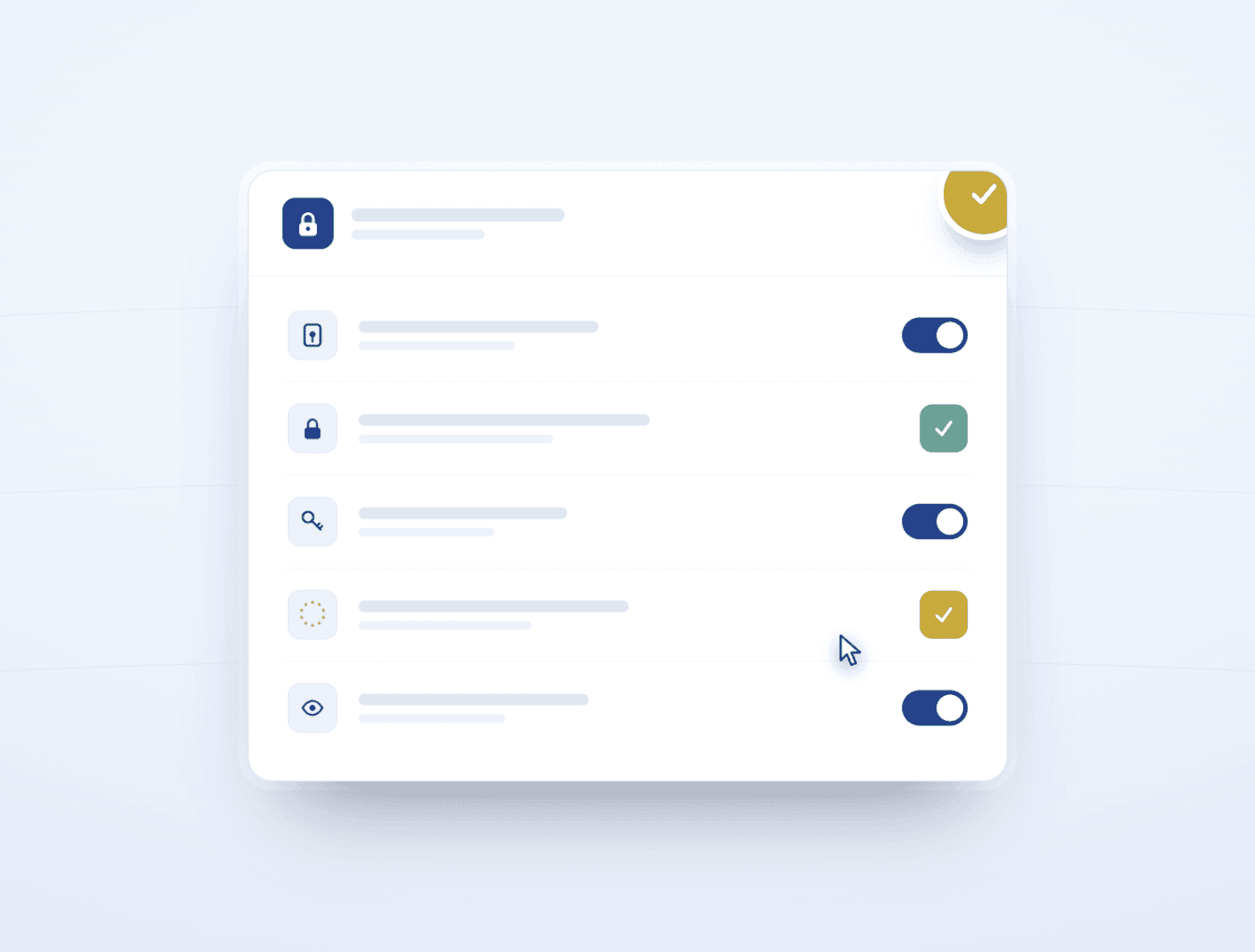
The platform being secure is only half the equation — the other half is how you configure your environment. Moving from technical theory to strategic practice requires deliberate action. To prevent unauthorized access and data leakage, both internal and external, the following best practices should be implemented:
Identity and Access Management: Reduce the risk of compromised accounts by integrating monday.com with your existing identity provider (such as Microsoft or Okta) for Single Sign-On (SSO). Leverage the platform's permission controls to precisely govern who can view and edit specific boards and columns — with more advanced access controls, such as workspace-level restrictions, available on higher-tier plans.
Secure Guest Management: Collaborating with external partners and clients is one of the platform's strengths, but it requires tight protocols. Configure the system so that guests only have access to the specific boards they have been invited to (Shareable Boards), and restrict their ability to see other members within the account.
Data Minimization in Workspaces: Apply the Principle of Least Privilege. Segment your environment into closed workspaces for sensitive departments such as HR, Finance, and Leadership — note that closed workspaces are available on the Enterprise plan. Avoid storing sensitive personal data unless strictly necessary, and ensure appropriate protection — for example, by using hidden columns to restrict visibility within otherwise open projects.
monday.com offers a robust, enterprise-grade security infrastructure for organizations with high demands on security and regulatory compliance, particularly when the platform is configured to use European servers. However, it would be a mistake to assume the software resolves your GDPR obligations on its own. Security is an ongoing process. By establishing a clear strategy for access management, leveraging the platform's built-in controls, and educating your users, you build a Work OS environment that not only drives business value — but also protects your most critical asset: your data.
Articles
Get inspired with our latest thoughts
on digital transformation